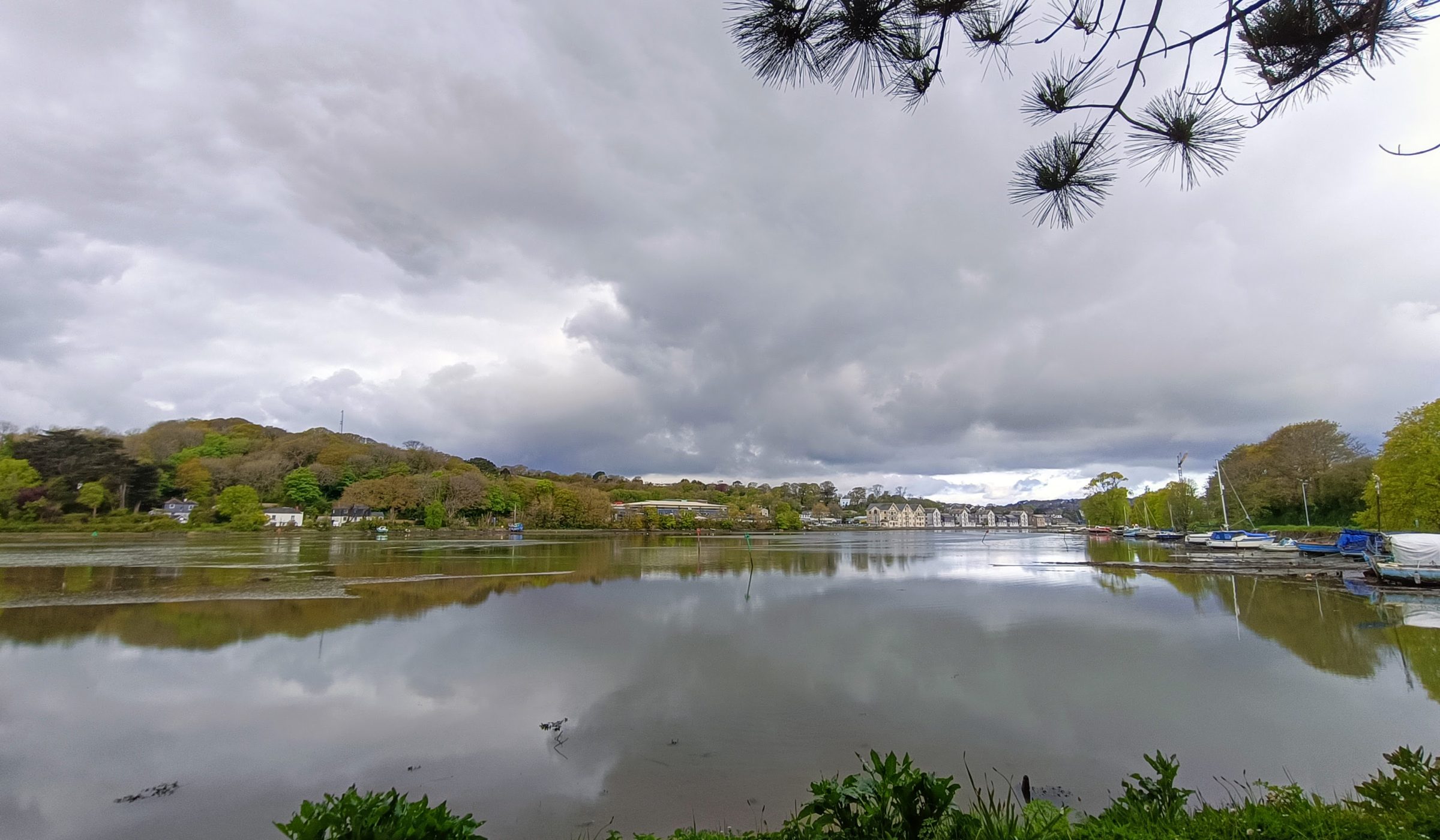
Truro is the only city in Cornwall, and the county's administrative centre. It stands where the rivers Kenwyn and Allen meet: below that meeting point the water is the Truro River, which reaches the sea through the Fal estuary. The cathedral, completed in 1910 to the designs of John Loughborough Pearson, rises over the rooftops, and the streets around it belong to a town that assayed and coined tin long before it became a city in 1877.
In Kernewek, the city is Truru, pronounced TROO-roh.
The city and the cathedral
City status came in 1877, during the reign of Queen Victoria. Until then, Truro was a town in the ordinary sense: a port at the head of the tide, a market, and a place of courts and counting houses. The cathedral changed its skyline for good. Designed by John Loughborough Pearson, it was completed in 1910, and it remains the reason many visitors first climb the hill up from the river.
The rivers
The Kenwyn and the Allen meet at the centre of the city. Below the meeting point the water is called the Truro River, and it runs down to the Fal estuary and the open sea. The river shaped the town's working life from the start.
Working life and the present
Truro was one of the four Cornish stannary towns, where tin was assayed and coined. Trade and administration kept the town busy after the mines declined, and it is still Cornwall's administrative centre: Cornwall Council has its headquarters in the city. The Royal Cornwall Museum and the Hall for Cornwall, a large theatre on Lemon Quay, are both in the city.
Sources
- https://en.wikipedia.org/wiki/Truro
- https://en.wikipedia.org/wiki/Truro_Cathedral
- https://en.wikipedia.org/wiki/Stannary_towns
- https://en.wikipedia.org/wiki/Royal_Cornwall_Museum
- https://en.wikipedia.org/wiki/Hall_for_Cornwall
Last checked: 2026-10-11